There’s something about boutique hotels and coastal retreats that makes ordinary summer decorating feel a little… underwhelming.
It’s not that they’re filled with expensive things everywhere. In fact, the best ones are often surprisingly simple. The difference is in how everything is layered — light, texture, restraint, and just enough character to feel curated instead of decorated.
And that’s exactly what makes this style so addictive in summer. It’s relaxed, but never careless. Minimal, but never empty. Effortless, but clearly thought through.
If your space is craving that quiet, vacation-like energy, these ideas bring that boutique hotel feeling home without needing an actual beachfront booking.
1. All-White Bedding and Soft Neutral Layers
This is the foundation of almost every boutique hotel aesthetic.
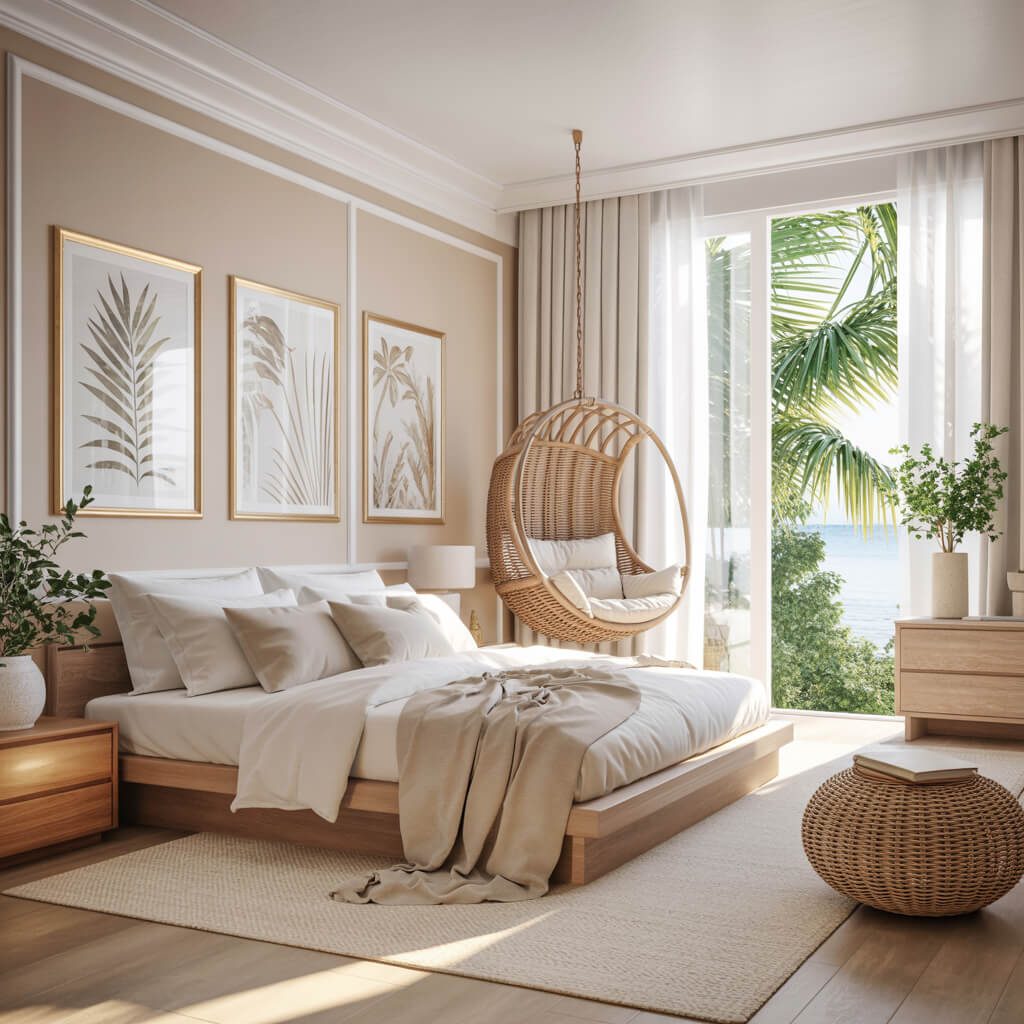
Crisp white bedding layered with soft beige or ivory throws instantly makes a bedroom or living-adjacent space feel clean, airy, and intentionally styled. The magic is in the layering — nothing should look flat or overly perfect.
Even in a living room, light throws and cushions can recreate that same calm hotel energy.
Why This Works
White reflects light beautifully, while neutral layers add softness and depth so the space feels inviting rather than sterile.
2. Natural Linen Curtains That Move With the Breeze
Nothing says coastal retreat quite like sheer, flowing curtains.
Light linen or cotton drapes instantly soften a space and make it feel breathable. The subtle movement when windows are open adds that relaxed, “always summer here” feeling that boutique hotels do so well.
They also diffuse harsh sunlight into something warm and cinematic.
Designer Tip
Let curtains slightly puddle or fall loosely instead of keeping them overly tailored.
3. Woven Textures Everywhere
This is where the coastal influence really shows up.
Rattan chairs, jute rugs, woven baskets, and natural fiber lampshades all add layers of texture that feel organic and grounded. These materials instantly make a room feel more relaxed and less polished in a rigid way.
It’s texture, not color, that creates that coastal richness.
Cozy Factor
The mix of natural fibers creates a warm, barefoot, lived-in luxury atmosphere.
4. Soft Sand and Warm White Color Palette
This palette is the backbone of boutique hotel interiors.
Soft sand tones paired with warm white create a calm, sun-washed environment that feels endlessly soothing. It’s bright without being harsh, neutral without being boring.
Perfect for spaces that get strong natural light throughout the day.
Why This Works
The tonal variation keeps the space visually soft while still feeling layered and warm.
5. Oversized Art With Calm, Abstract Themes
Boutique hotels rarely use cluttered walls — they use presence pieces.
One oversized artwork with soft, abstract tones instantly elevates a room and makes it feel more intentional. Think muted landscapes, blurred seascapes, or simple tonal compositions.
It creates focus without visual noise.
Designer Tip
Stick to soft, non-contrast palettes in artwork to maintain a relaxed atmosphere.
6. Light Wood Furniture With Clean Lines
Light wood is the quiet hero of coastal-inspired design.
It brings warmth without heaviness and works beautifully with soft neutrals. Clean-lined furniture keeps the look modern and uncluttered, which is key to achieving that boutique feel.
It’s simplicity done with precision.
Why This Works
Light wood balances airy color palettes by adding natural warmth and grounding the space.
7. Layered Lighting Instead of One Bright Source
Boutique hotels never rely on a single ceiling light — and your home shouldn’t either.
Instead, they use layered lighting: table lamps, floor lamps, soft wall lights, and warm ambient glow. This creates depth and atmosphere, especially in the evenings.
It’s what makes a space feel calm instead of harsh.
Designer Tip
Always choose warm-toned bulbs to keep the lighting soft and flattering.
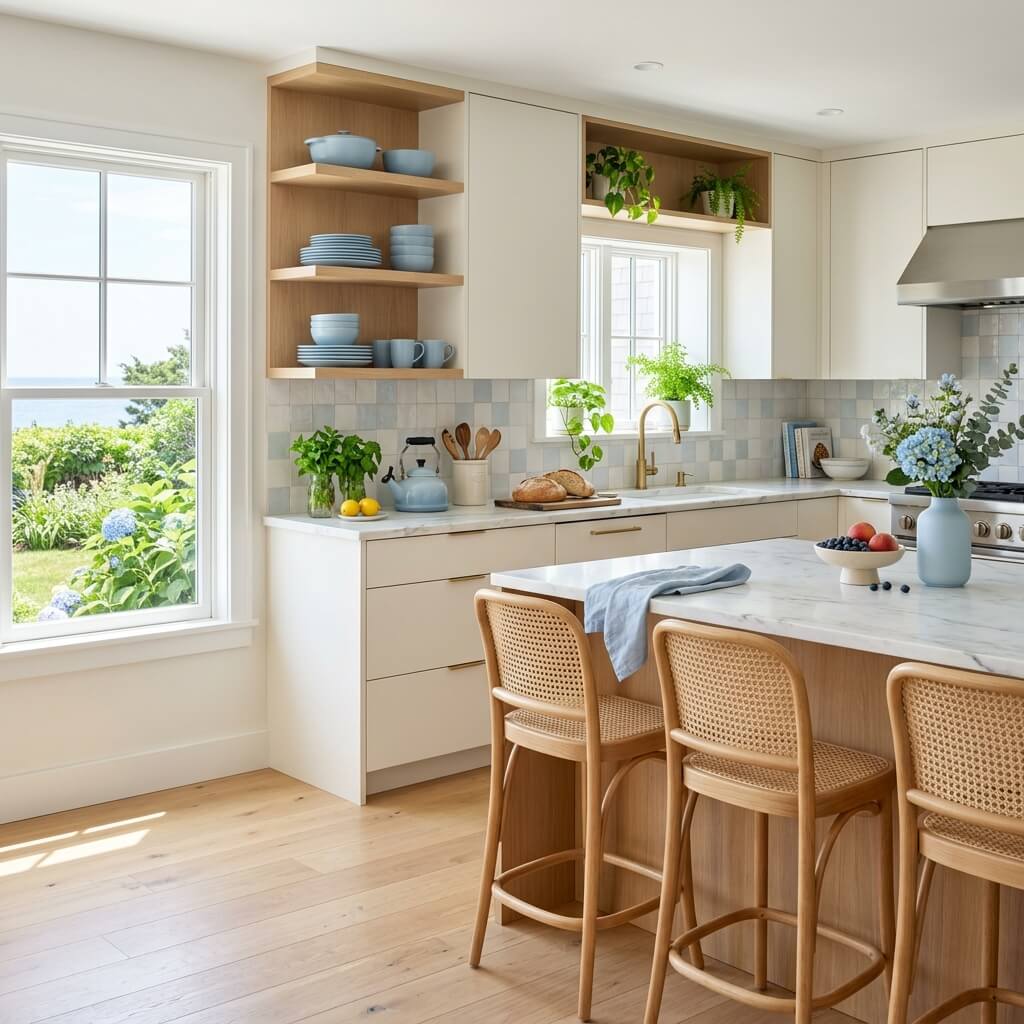
8. Soft Coastal Blues Used Sparingly
Coastal style doesn’t mean turning your home into a beach theme park.
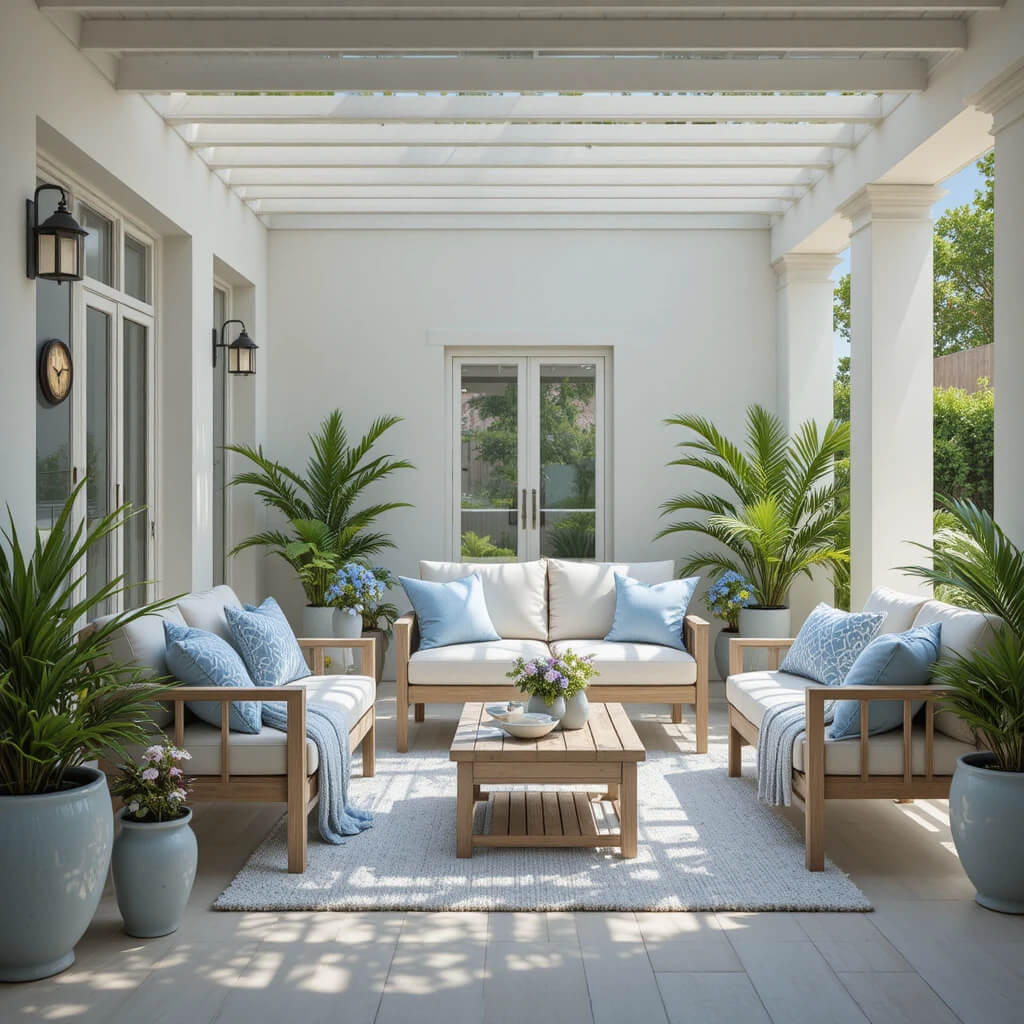
Soft, muted blues work best when used in small doses — cushions, ceramics, or subtle decor accents. This keeps the palette fresh without overwhelming the neutrality of the space.
It should feel like a whisper of the ocean, not a literal interpretation.
Why This Works
Cool tones balance warm neutrals and add a refreshing visual contrast.
9. Minimal Styling With Intentional Objects
Boutique hotel rooms never feel overcrowded.
Instead of filling every surface, they focus on a few intentional pieces — a sculptural vase, a stack of books, or a simple tray. This makes every object feel more meaningful.
Negative space becomes part of the design.
Watch Out For
Too many decorative items can quickly destroy the calm, curated feeling.
10. Neutral Upholstery With Soft, Relaxed Shapes
Furniture in boutique-inspired spaces is rarely stiff or overly structured.
Think soft curves, relaxed cushions, and upholstery in beige, ivory, or muted taupe. The goal is comfort that still looks elevated and intentional.
It’s about ease, not formality.
Why This Works
Soft silhouettes visually relax the room and enhance the laid-back atmosphere.
11. Indoor Plants That Feel Effortless, Not Styled
Coastal retreats always feel connected to nature.
But the key is restraint — one or two well-placed plants are more effective than a crowded indoor jungle. Large leafy plants in simple pots work best because they feel natural, not staged.
They soften corners and bring subtle movement into the room.
Designer Tip
Choose plants with broad, simple leaves for a more relaxed visual effect.
12. Soft, Layered Rugs Instead of One Flat Surface
Boutique hotels often layer textures underfoot.
A natural jute rug paired with a softer woven or neutral-toned rug adds depth and warmth. This prevents the floor from feeling cold or unfinished.
It also subtly defines different areas within open spaces.
Cozy Factor
Layered rugs instantly make a room feel more tactile and grounded.
13. Subtle Metallic Accents for Quiet Luxury
Metallics in boutique interiors are never loud or shiny.
Brushed brass, matte gold, or soft bronze accents appear in small details like lamp bases, handles, or frames. These touches catch light gently without overpowering the space.
It’s the kind of detail you notice only when you slow down.
Why This Works
Soft metallics add warmth and refinement without visual distraction.
14. Open, Airy Layout With Breathing Space
The most important element of boutique hotel design isn’t decor — it’s space.
Furniture is arranged to allow movement, light flows freely, and nothing feels cramped or forced. This openness is what creates that calm, restorative feeling.
It’s less about filling a room and more about letting it breathe.
Personal Take
A room only starts feeling expensive when it stops trying too hard to be full.
Wrap Up
Boutique hotel and coastal retreat design isn’t about copying a look — it’s about capturing a feeling.
It’s the feeling of slow mornings, soft light, uncluttered surfaces, and spaces that don’t demand attention but quietly hold it anyway.
When you combine natural textures, airy palettes, and intentional restraint, your home starts to feel less like a collection of furniture and more like a place you actually exhale in.
And that’s really the goal — not perfection, but ease that looks expensive without trying.